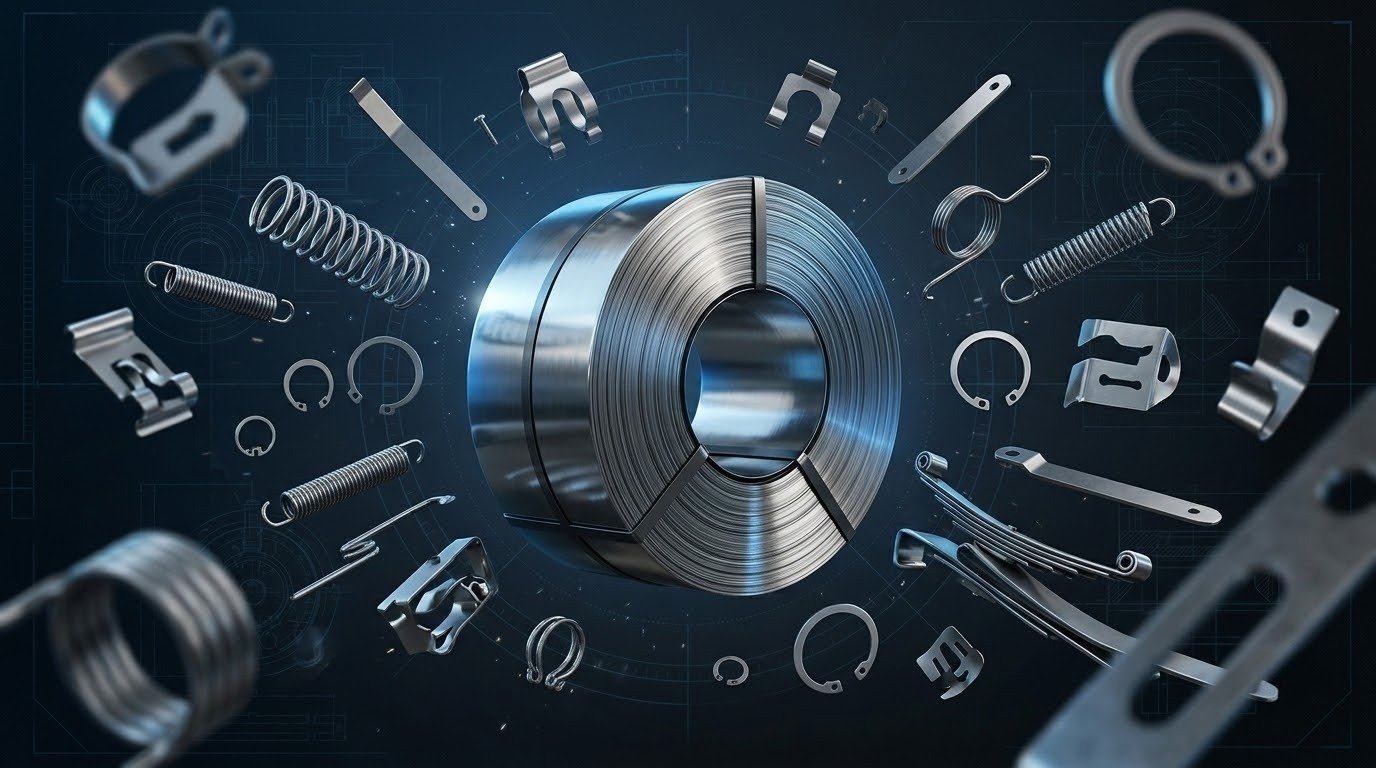
Spring steel plays an important role in industries where strength, flexibility, and durability matter. From automotive components to industrial machinery, manufacturers rely on quality steel materials to produce parts that can handle repeated stress without losing their shape. Spring steel strips and coils are widely used because they offer a practical combination of resilience, hardness, and reliable performance across different applications.
At Steelcorp, understanding the properties and uses of steel helps manufacturers choose suitable materials for their production requirements.
Spring steel is designed to withstand repeated bending, loading, and mechanical stress. Its ability to return to its original shape after deformation makes it useful for components that need consistent performance over time.
Depending on the application, manufacturers can select different grades, thicknesses, and hardness levels. These factors influence the material's strength, flexibility, and suitability for specific working conditions.
The automotive sector uses spring steel in components such as springs, clips, retaining rings, and certain suspension parts. These components must withstand vibration and repeated movement while maintaining their performance.
Spring Steel Coils are useful in manufacturing processes that require continuous material feeding, cutting, stamping, or forming into specific shapes.
Machinery often contains small but essential components that manage pressure, movement, and mechanical loads. Spring steel is used to manufacture springs, fastening elements, locking mechanisms, and other precision parts.
The Industrial Uses of Spring Steel extend to equipment where dependable performance and resistance to repeated stress are important for day-to-day operations.
Spring steel is commonly used in the production of measuring tools, metal clips, blades, and selected hand-tool components. The required grade and heat treatment depend on the hardness, flexibility, and edge retention needed for each product.
High Carbon Spring Steel Strips can be suitable for applications that require high hardness and strength when the material is processed and heat-treated appropriately.
Electrical and electronic products use metal contacts, connectors, terminals, and retaining components that may need spring action. Spring steel can be considered for selected parts where mechanical strength and shape retention are priorities. The material grade must also suit the required electrical and corrosion-resistance properties.
Spring Steel Applications in Manufacturing cover a wide range of products, from automotive parts to industrial fittings. Manufacturers often choose strip and coil formats because they can be integrated into automated production processes, helping maintain consistent dimensions and reduce material waste.
Choosing the right grade, thickness, surface finish, and heat treatment is essential. These details can affect product quality, production efficiency, and the service life of the finished component.
Before selecting a material, businesses should consider the operating load, working environment, required flexibility, and intended manufacturing process.
Spring steel strips and coils are used to manufacture springs, clips, retaining rings, automotive components, precision tools, and various industrial parts.
Spring steel offers strength, elasticity, and resistance to repeated mechanical stress, making it suitable for components that need to maintain their shape during regular use.
High Carbon Spring Steel Strips are used in applications requiring hardness, strength, and wear resistance, depending on the grade and heat treatment.
Manufacturers should evaluate the required thickness, hardness, flexibility, operating conditions, surface finish, and applicable industry specifications before choosing a suitable grade.
Spring Steel Coils support continuous feeding and automated processing, making them practical for high-volume stamping, cutting, and forming operations.
From automotive manufacturing to precision engineering, spring steel strips and coils support the production of durable and reliable industrial components. Selecting the right material for a specific application helps manufacturers achieve consistent quality and dependable performance. Understanding the material's properties and processing requirements is an important first step towards making the right choice.