Steel strips are often required in very specific widths for industrial manufacturing.
Buying a large coil and processing it into narrower strips is where precision slitting
becomes important.
Precision slitting is a steel processing operation in which a wider coil is divided into
multiple narrower strips using specialized slitting equipment. The process allows
manufacturers to receive material closer to their required dimensions and can support
more efficient downstream production.
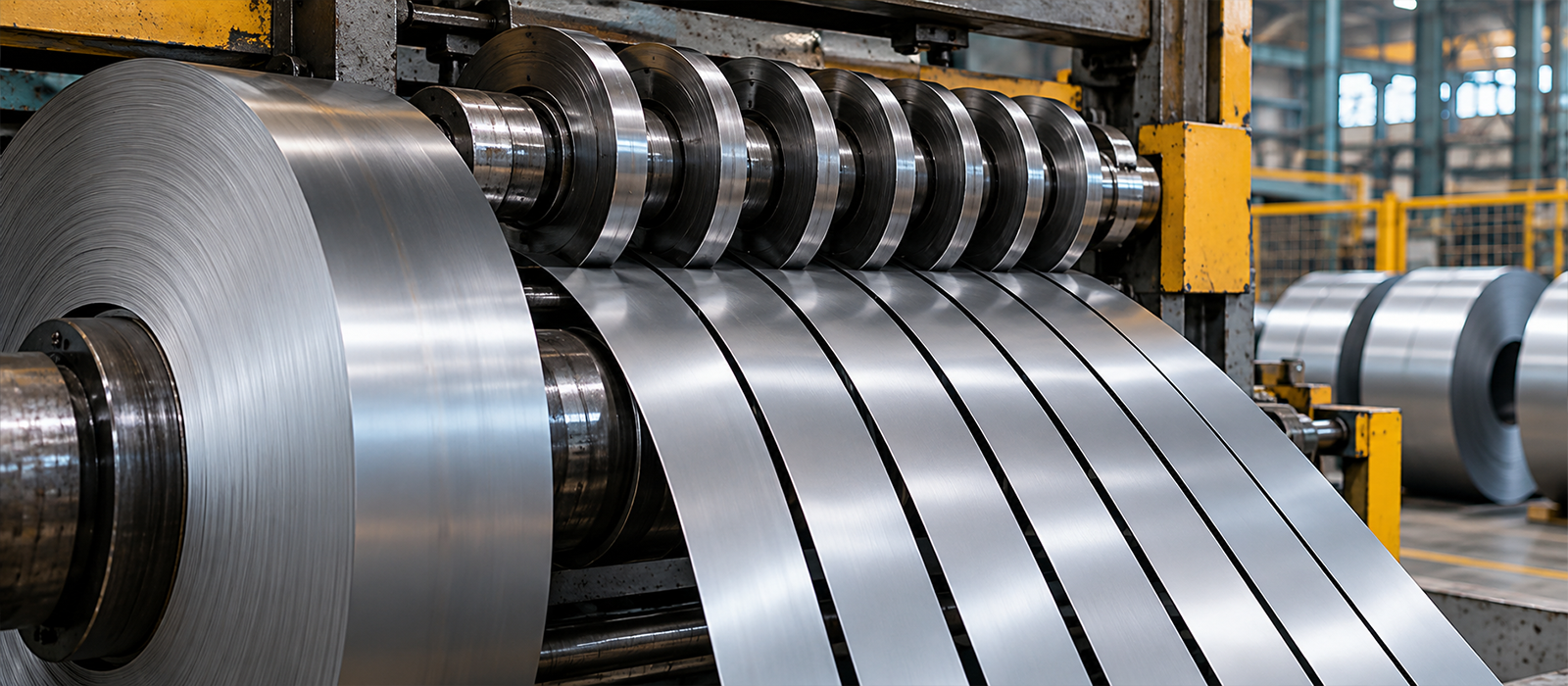
Precision slitting involves feeding a wide steel coil through a slitting machine equipped
with circular knives. These knives make continuous longitudinal cuts through the coil,
separating it into narrower strips.
The process may be used with different steel grades and thicknesses, depending on the
capabilities of the processing equipment and the customer's requirements.
Accurate strip width is important for many industrial applications. If the width varies beyond the required tolerance, it can affect forming, assembly and overall production efficiency.
One of the main benefits of precision slitting is the ability to produce strips with controlled and consistent widths. This is particularly useful for manufacturers working with automated production systems.
When steel is supplied in the required width, manufacturers may be able to reduce additional cutting or processing operations at their facility.
Consistently processed strips can help simplify downstream operations and improve material utilization.
The steel coil is inspected and prepared before processing. The material grade, thickness and required strip widths are checked against the order specifications.
The coil passes through the slitting line, where rotary knives divide the wider coil into narrower strips.
After slitting, the individual strips are collected and recoiled according to the required specifications.
The finished strips can then be inspected for dimensions, surface condition and other specified requirements before dispatch.
Precision-slit steel strips can be used across several industrial sectors, including
automotive components, spring manufacturing, engineering products, tools and general
industrial applications.
The required slit width and tolerance depend on the customer's manufacturing process
and final product.
When selecting a supplier for precision slitting, manufacturers should consider more than the machine's cutting capability.
Discuss the required width, thickness and dimensional tolerances before processing begins.
A supplier familiar with different steel grades can better understand the processing requirements associated with each material.
Consistent inspection and process control are important when narrow strips are being produced for industrial applications.
Precision slitting plays an important role in converting wider steel coils into accurately
sized strips for manufacturing. The process can help manufacturers reduce additional
processing, improve material handling and receive steel closer to their production
requirements.
For the best results, buyers should clearly communicate their grade, thickness, width,
tolerance and application requirements to an experienced steel processing partner.