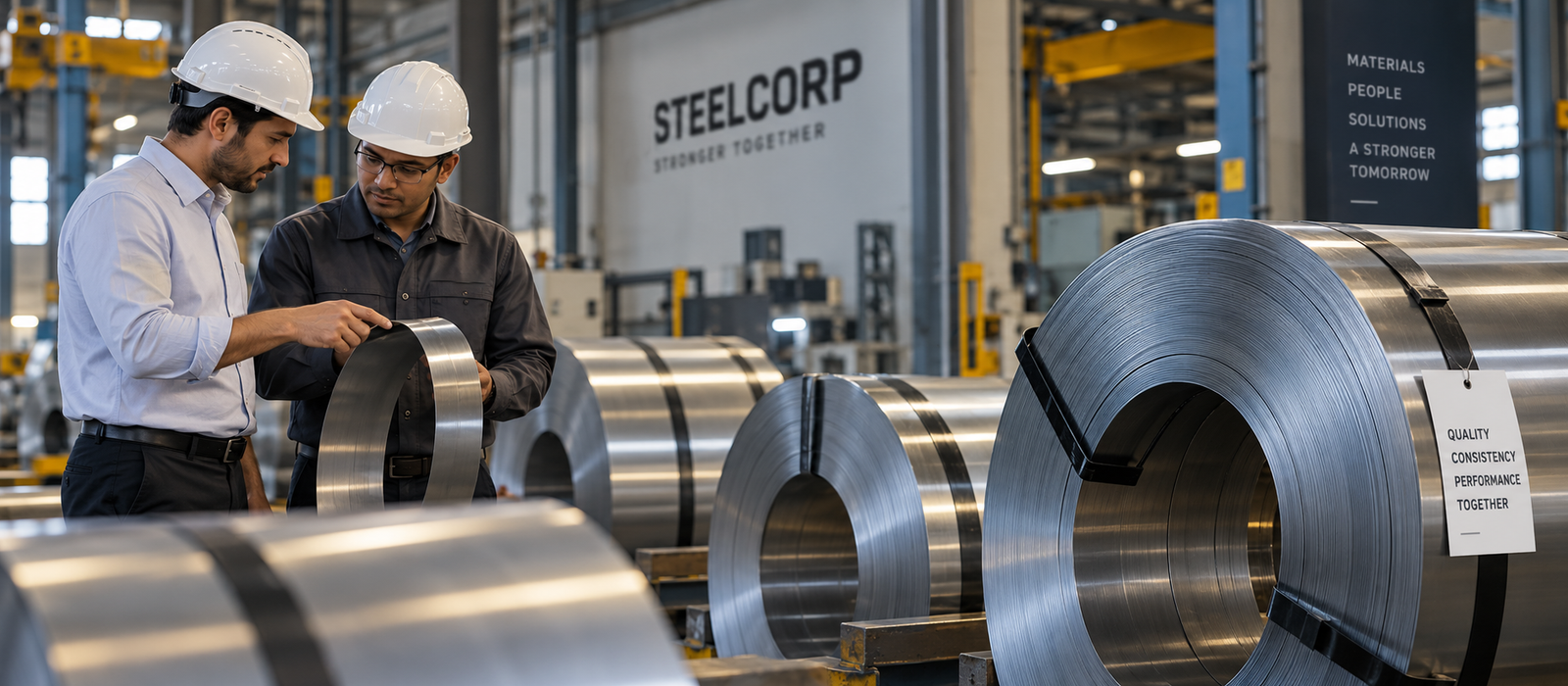
Choosing the right spring steel supplier is an important decision for manufacturers
that depend on consistent material quality and reliable performance. Spring steel is
used in applications where strength, flexibility, hardness and fatigue resistance matter,
so the quality of the steel can directly affect the finished component.
With many suppliers available in the market, it can be difficult to know which one is the
right fit for your requirements. Looking beyond price and checking the supplier’s
manufacturing capabilities, material quality and ability to meet specific specifications
can make a significant difference.
Before approaching a supplier, it is important to clearly define what you need. Spring steel is available in different grades, conditions, thicknesses and widths, and the right choice depends on the application.
Different applications require different steel grades. Factors such as carbon content,
hardness, tensile strength and flexibility should be considered before selecting a
material.
A reliable supplier should be able to explain the differences between available grades
and recommend an appropriate option based on your application rather than simply
offering the most commonly available material.
For industrial components, even small variations in strip thickness or width can affect
manufacturing and final product performance. Make sure the supplier can consistently
provide the dimensions required for your production process.
This is particularly important when purchasing precision steel strips for automated or
high-volume manufacturing.
Consistency is one of the most important factors when selecting a spring steel supplier.
Material that varies from batch to batch can create problems during forming, heat
treatment and assembly.
Ask the supplier about their quality control procedures, testing facilities and inspection
processes. Material certificates and relevant test reports can also provide useful
information about the steel being supplied.
A supplier with proper quality testing facilities is generally better positioned to maintain
consistency. Depending on the material and application, testing may include hardness,
tensile strength, chemical composition, dimensions and surface quality.
The goal is not simply to purchase steel, but to receive material that performs
consistently throughout your production cycle.
A supplier's manufacturing capabilities can be just as important as the material itself. Some industrial applications require steel strips to be supplied in specific widths, lengths or surface conditions.
Services such as slitting, shearing and cut-to-length processing can help manufacturers
receive steel in a form that is closer to their production requirements. This can reduce
additional processing work and improve material handling.
If you regularly require customized dimensions, choose a supplier that has the
equipment and experience to handle such requirements.
Even high-quality steel is of limited value if deliveries are inconsistent. Production
schedules depend on a steady supply of raw materials, particularly for manufacturers
working with regular orders.
Ask about lead times, production capacity, order quantities and delivery capabilities
before committing to a supplier. A dependable supplier should be able to communicate
clearly about production and delivery schedules.
Experience matters when dealing with technical steel products. An established spring
steel supplier is more likely to understand the practical challenges associated with
different industrial applications.
Look for a company that can discuss material selection, specifications and processing
requirements with your technical or purchasing team. Good technical support can be
particularly valuable when developing a new product or changing material
specifications.
Cost is naturally important, but selecting a supplier solely on the lowest price can create
problems later. Poor material consistency, incorrect dimensions or delivery delays can
result in higher production costs.
Instead, consider the overall value offered by the supplier, including quality, technical
support, customization, reliability and delivery performance.
Choosing the right spring steel supplier requires more than comparing prices. Material
quality, manufacturing capabilities, technical expertise, processing options and delivery
reliability should all be part of the evaluation.
For manufacturers, the ideal supplier is one that understands the application and can
consistently provide steel that meets the required specifications. Taking the time to
evaluate these factors can help create a more reliable supply chain and support better
long-term production results.