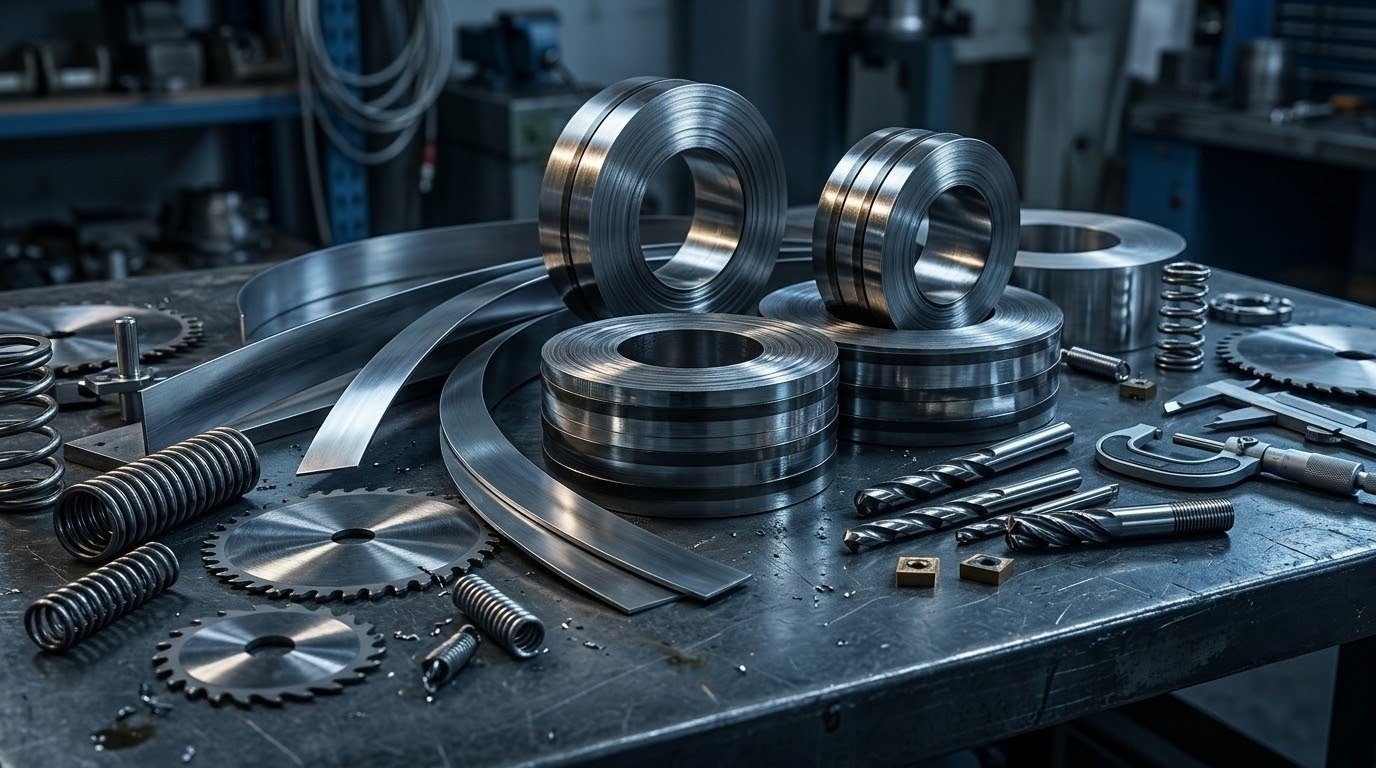
In precision manufacturing, even a small difference in material quality can affect the final product. From industrial springs to cutting tools and automotive components, manufacturers need steel that offers the right combination of strength, hardness and durability. This is where high carbon strips and coils play an important role.
Choosing the right steel material is not just about its price. Factors such as carbon content, thickness, hardness, surface finish and application requirements also matter. Understanding these factors can help manufacturers select a suitable material and achieve consistent results throughout production.
High carbon strips and coils are steel products containing a relatively high percentage of carbon, generally around 0.60% to 1.00%, although the exact range depends on the grade and applicable standards. Their carbon content helps them achieve high hardness and strength, particularly after suitable heat treatment.
These materials are supplied in strip form or wound into coils, making them suitable for continuous processing, stamping, forming and cutting operations. They are commonly used in applications where wear resistance, spring properties and dimensional consistency are important.
Selecting the right material requires more than simply comparing specifications. Manufacturers should consider how the steel will perform during processing and in its final application.
Different applications require different material properties. High carbon steel grades should be selected according to the required hardness, strength, toughness and heat-treatment response. Reviewing the technical specifications before purchasing helps reduce material waste and production issues.
In precision manufacturing, consistent thickness is essential for producing components with accurate dimensions. The correct strip thickness and width can improve production efficiency, minimise adjustments and help maintain uniform product quality.
Surface defects can affect the performance and appearance of finished components. Manufacturers should check surface quality, hardness requirements and the suitability of the steel for their intended processing method before placing an order.
High carbon steel coils are widely used in industries that require durable materials with reliable mechanical properties. Common applications include industrial springs, saw blades, cutting tools, measuring instruments, fasteners and selected automotive components.
Choosing suitable high carbon steel coils for manufacturing can help businesses maintain consistent production quality and meet application-specific performance requirements. The appropriate grade and processing condition will depend on whether the material needs to be formed, hardened, tempered or used in another manufacturing process.
Working with experienced high carbon steel strip manufacturers can make material selection easier. A dependable supplier should provide clear product specifications, consistent quality, suitable dimensions and technical information about available grades.
Before making a purchase, manufacturers should confirm the required carbon content, thickness tolerance, surface condition and delivery specifications. It is also helpful to discuss the intended application with the supplier to identify a suitable material.
At Steelcorp, businesses looking for steel strip and coil solutions can explore the available product information at Steelcorp and discuss their specific material requirements with the company.
They are used to manufacture industrial springs, cutting tools, saw blades, fasteners and other components that require strength, hardness or wear resistance.
Consider the required hardness, strength, thickness, forming process, heat treatment and final application. Check the applicable material specifications before selecting a grade.
They offer potential benefits such as high hardness, strength and wear resistance when the appropriate grade and processing conditions are selected.
Review product specifications, dimensional tolerances, surface quality, quality documentation, available grades and the supplier's ability to meet your requirements.
Yes. They can be suitable for precision components when the material grade, dimensional tolerances, processing method and final mechanical properties meet the application requirements.
Selecting the right high carbon strips and coils is an important step towards achieving precision, durability and consistent performance in manufacturing. By evaluating steel grades, dimensions, hardness, surface finish and supplier reliability, manufacturers can make informed purchasing decisions and avoid unnecessary production challenges.
The best material is the one that matches the component's actual requirements, performs reliably during processing and delivers the properties needed in the finished product.